Replacement Engines is Committed to Offer Customers a Cost Effective Solution to their Engine Problems
The Rebuilt Range Rover Vogue Engine Myth That Claims Recycled Components Are Identical to New — Here’s the Verifiable Truth
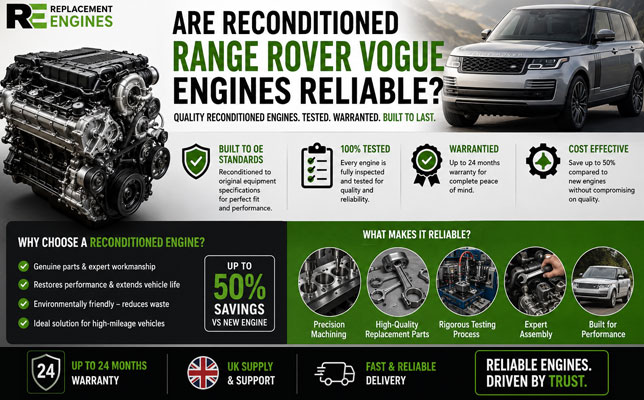
Reject the Recycled-Parts Hoax That’s Costing Range Rover Vogue Owners Thousands: The Rebuilt Engine Component Reality Checklist That Separates Fact from Forum Fiction
Range Rover Vogue 5.0L (AJ133 V8) owners face a minefield of conflicting advice on replacement engines. Forum warriors swear by “as good as new” rebuilt units, while others warn that anything less than factory-fresh is a disaster waiting to happen. This article names the persistent myths, exposes who profits from them, and delivers the Nuanced Reality backed by UK sources. No hype, just cold engineering truth from 20+ years on the spanners.
Does ‘Reconditioned’ Actually Mean What You Think It Does When Applied to a Rebuilt Range Rover Vogue Engine?
The most dangerous terminology myth is that “reconditioned,” “rebuilt,” and “remanufactured” are interchangeable labels guaranteeing identical performance to a new engine. Many sellers use them loosely to justify premium pricing on engines for sale or used engines for sale.
Why it exists: Vague UK terminology lets suppliers differentiate minimally repaired units from thorough overhauls while charging near-premium prices. It persists because casual buyers and even some garages don’t demand clear definitions, benefiting sellers of cheaper “recons.”
Nuanced Reality A properly reconditioned Range Rover Vogue engine is a used core that has been fully disassembled, cleaned, inspected, machined where necessary, and rebuilt with new or reconditioned components to restore performance. It is not identical to new. UK industry practice (as noted in specialist guidance and Trading Standards expectations) requires transparency, but “reconditioned” can vary widely—from basic gasket swaps to near-full rebuilds.
What this means for you: Always demand a detailed build sheet specifying replaced components, machining tolerances, and testing. This protects you under the Consumer Rights Act 2015.
Many “budget” reconditioned engines skip full disassembly or critical upgrades like revised timing components on the AJ133, leading to repeat failures that keep the workshop busy.
Is It True That Reconditioned Range Rover Vogue Engines Simply Reuse Worn-Out Parts – What the Teardown Data Shows?
Myth: Rebuilt or reconditioned Range Rover Vogue engines are just cleaned-up scrap with the same tired components slapped back in.
Why it exists: Horror stories from poorly executed jobs spread on forums, amplified by new-engine sellers. It scares buyers toward more expensive options while low-end suppliers quietly cut corners.
Nuanced Reality Quality reconditioned engines replace or restore all wear items (bearings, rings, gaskets, chains/guides where needed) and machine critical surfaces. Teardowns show that reputable builders achieve high reliability, though not identical to new factory tolerances. Sources like specialist UK engine rebuilders emphasise proper processes over outright new parts.
What this means for you: A well-executed reconditioned unit can deliver strong service life at a fraction of new cost, especially for high-mileage Vogue models.
What most independent garages won’t tell you is… the biggest risk isn’t reused parts—it’s inconsistent quality control between suppliers. Insist on dyno testing and a meaningful warranty.
Are Reconditioned Range Rover Vogue Engines Reliable? The Timing Chain and Component Truth
Myth: All rebuilt Range Rover Vogue 5.0L engines will suffer the same early timing chain failures as originals.
Why it exists: Early AJ133 issues (pre-~2013/2014) created lasting reputation damage. Competitors and new-part suppliers keep the fear alive.
Nuanced Reality Early 5.0L AJ133 V8s had known timing chain tensioner and guide wear (steel tensioner wearing aluminium guides). JLR issued revised components around 2013-2015 with hardened inserts and stronger chains. A quality reconditioned engine incorporating these updates, combined with proper oil changes, significantly mitigates the issue. UK owner reports and technical analysis confirm later/upgraded units are far more robust.
What this means for you: For a Range Rover Vogue 5.0L, verify that any replacement engine has the updated timing set. This is one of the most engine-code-specific realities.
What Forum Advice About Range Rover Vogue Engine Compatibility Is Actively Dangerous and Why?
Myth 1: Any 5.0L AJ133 engine swaps straight into any Vogue without issues (cross-compatibility myth).
Why it exists: Forum “experts” overlook ECU mapping, wiring, emissions, and variant differences (NA vs supercharged).
Nuanced Reality Compatibility requires matching engine code specifics, software, and ancillary components. GOV.UK and DVSA rules on emissions mean improper swaps can fail MOT. SMMT consumer guidance stresses proper installation.
What this means for you: Professional fitting with coding is essential.
Myth 2: A cheap used engine for sale will pass ULEZ and MOT emissions just like a fresh rebuild.
Why it exists: Sellers of low-mileage pulls push quick fixes.
Nuanced Reality High-mileage used engines often have wear that affects emissions. A properly reconditioned unit with fresh components performs better here. Check RAC and AA advice on vehicle compliance.
Myth 3: Diagnostic shortcuts like “just clear the codes” fix underlying AJ133 issues.
Why it exists: Non-experts want cheap solutions.
Nuanced Reality Proper diagnosis with JLR tools is required for V8 specifics. Forum shortcuts lead to bigger failures.
What most independent garages won’t tell you is… many avoid deep AJ133 work due to labour intensity, pushing generic advice instead.
Which Range Rover Vogue Engine Warnings Are Completely True – and How Do You Actually Mitigate Them?
Not everything is a myth. Here are genuine risks for the 5.0L AJ133.
Risk 1: Cooling system degradation leading to overheating. Plastic pipes and water pumps fail, causing catastrophic damage. How to mitigate: Replace proactively at 60-80k miles with upgraded parts during engine install. Source: Owner data and technical bulletins echoed on Honest John and specialist sites.
Risk 2: Neglected oil changes accelerating timing component wear. How to mitigate: Change oil every 5-7k miles with correct spec. This is the cheapest insurance for any rebuilt Range Rover Vogue engine.
Risk 3: Poor installation causing immediate post-fit problems. How to mitigate: Use specialists with proven AJ133 experience, full ancillaries refresh, and road testing. DVSA/SMMT emphasise competent fitting.
What most independent garages won’t tell you is… many quotes low to win the job but cut corners on supporting components, leading to warranty disputes.
The Specific 5.0L AJ133 Myths That Still Trap Vogue Owners
Myth: Remanufactured Range Rover Vogue engines are basically new engines. Why it exists: Marketing spin. Nuanced Reality: They restore to high standards but use a mix of reconditioned and new parts. Not factory-new. UK rebuilders clarify this distinction.
Myth: All used engines for sale near me are lottery tickets with no reliable mileage left. Why it exists: Bad experiences. Nuanced Reality: Low-mileage, well-documented pulls can be excellent if inspected thoroughly—better value in some cases than poor recons.
What this means for you: Prioritise documented history over price.
Explore More About Range Rover Vogue
- 1 Blown Engine Panic? Rebuilt Range Rover Vogue Engine: Unmasking the Truth Behind Vague Dealer Quotes
- 2 The Range Rover Vogue: Luxury and Style in One Compact Package
- 3 Range Rover Sport Ready to Smooth Your Way
- 4 What to Look When Buying Range Rover Evoque Engines in the UK – Expert Checks Before You Buy One Near You
People Also Ask
What is the difference between rebuilt and reconditioned Range Rover Vogue engine?
Rebuilt typically means repairing specific failures; reconditioned involves full disassembly, inspection, and restoration to spec. Neither is identical to new, but quality reconditioned units offer excellent value.
Are rebuilt Range Rover Vogue engines reliable?
Yes, when done properly with updated AJ133 components and good installation. Reliability depends far more on the builder’s process than the label.
How much does a replacement Range Rover Vogue engine near me cost?
Reconditioned units are significantly cheaper than new while delivering strong performance for most owners. Expect detailed quotes with build sheets.
What are common problems with Range Rover 5.0 AJ133 engines?
Timing components in early units, cooling system wear, and oil neglect. Updated reconditioned engines address many of these.
Is it worth buying a used engine for sale for a Range Rover Vogue?
It can be, if low-mileage with history and professional inspection. Reconditioned is often safer for peace of mind.
Does a reconditioned Range Rover Vogue engine affect ULEZ compliance?
Properly built ones maintain or improve emissions performance. Always verify post-install MOT.
How long do reconditioned 5.0L Range Rover engines last?
With proper maintenance, many exceed 100k+ additional miles. Quality of rebuild is the key variable.
The facts are clear: the recycled-parts hoax thrives because confusion sells both overpriced new engines and under-delivering “bargains.” Arm yourself with this checklist, demand transparency, and choose a supplier who shows their work. Your Range Rover Vogue deserves an engine solution grounded in engineering reality, not forum fiction.
Ready for a no-nonsense quote on a properly rebuilt Range Rover Vogue 5.0L engine? Contact a reputable specialist today—your wallet and your driveway will thank you.